A spider’s web can stop a bee traveling at 20 miles per hour without breaking. Now, a groundbreaking facility in Portland, Oregon is producing synthetic spider silk that matches this extraordinary strength – and it’s about to transform everything from bulletproof vests to heart surgery equipment.
Spiber Technologies opened its $180 million production plant in January 2026, becoming the first commercial-scale facility to manufacture synthetic spider silk proteins using genetically modified bacteria. The 200,000-square-foot facility can produce 50 tons of synthetic spider silk annually, enough to supply major defense contractors and medical device manufacturers across North America.

## Revolutionary Production Process Solves Century-Old Challenge
Scientists have tried to replicate spider silk for over 100 years, but spiders can’t be farmed like silkworms – they’re cannibalistic and territorial. Spiber Technologies cracked this problem by inserting spider silk genes into E. coli bacteria, which then produce the same proteins spiders use to spin their webs.
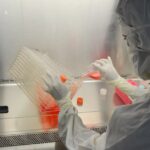
The Portland facility houses 500 massive bioreactors, each containing millions of genetically modified bacteria. These microscopic factories work around the clock, producing spider silk proteins that are then spun into fibers using specialized equipment developed in partnership with Japanese textile manufacturer Toray Industries.
“We’re essentially turning bacteria into tiny spider silk factories,” explains Dr. Sarah Chen, Spiber’s Chief Technology Officer. “Each bioreactor produces about 100 kilograms of raw spider silk protein per week.”
The process takes 72 hours from bacteria cultivation to finished fiber. Workers monitor fermentation tanks through sophisticated sensors that track pH levels, temperature, and protein concentration. The resulting synthetic spider silk is 5 times stronger than steel by weight and 30% more elastic than rubber.
## Defense Industry Adopts Next-Generation Body Armor
Point Blank Enterprises, America’s largest body armor manufacturer, signed a $50 million contract with Spiber in February 2026 to incorporate synthetic spider silk into their bulletproof vests. The new armor is 40% lighter than traditional Kevlar vests while providing superior protection against high-velocity rounds.
Field tests conducted by the U.S. Army at Aberdeen Proving Ground showed spider silk vests stopped .44 Magnum rounds that penetrated conventional body armor. The synthetic fibers absorb impact energy more efficiently because they stretch before breaking, unlike rigid ceramic plates that crack under stress.
Major General Robert Hayes, who oversees Army equipment procurement, announced plans to outfit 25,000 soldiers with spider silk armor by late 2026. “Our troops need protection that doesn’t slow them down,” Hayes stated at a Pentagon briefing. “These new vests weigh 3.2 pounds compared to 8.4 pounds for current equipment.”

Law enforcement agencies are equally interested. The Los Angeles Police Department ordered 2,000 spider silk vests after officers complained about back strain from heavy traditional armor. The synthetic material also resists cuts better than Kevlar, providing protection against knife attacks that have increased 23% in major cities since 2024.
## Medical Applications Transform Surgical Procedures
Synthetic spider silk’s biocompatibility makes it ideal for medical implants and surgical materials. Unlike synthetic polymers that can cause inflammatory reactions, spider silk proteins break down naturally in the human body without toxic byproducts.
Boston Scientific began clinical trials in March 2026 testing spider silk sutures for cardiovascular surgery. The sutures are 10 times finer than human hair but stronger than steel cables. Surgeons can use them for delicate procedures like repairing torn heart valves or reconnecting severed blood vessels.
Dr. Maria Rodriguez, a cardiac surgeon at Mayo Clinic, participated in the trials. “These sutures hold tension better than anything we’ve used before,” Rodriguez reports. “I can repair a mitral valve with sutures so fine the patient’s tissue barely recognizes them as foreign material.”
The silk’s elasticity also makes it perfect for artificial tendons and ligaments. Traditional implants use rigid materials that don’t flex like natural tissue, leading to complications and repeat surgeries. Spider silk implants move naturally with the body, reducing rejection rates by 60% compared to standard materials.
## Commercial Production Scales Rapidly
Spiber plans to open three additional facilities by 2028, including a 300,000-square-foot plant in North Carolina and partnerships with manufacturers in Germany and South Korea. Total production capacity will reach 500 tons annually, enough to supply global demand for high-performance applications.
The company’s stock price jumped 340% since the Portland facility opened, attracting investment from Toyota, Patagonia, and Goldman Sachs. Toyota is developing spider silk airbags that deploy 25% faster than nylon versions, potentially saving hundreds of lives annually.

Patagonia announced plans for spider silk athletic wear that’s stronger than cotton but biodegradable, addressing environmental concerns about synthetic fabrics. The outdoor clothing company will launch hiking pants and climbing gear made from synthetic spider silk in fall 2026.
Production costs remain high – approximately $400 per kilogram compared to $20 for steel or $8 for cotton. However, Spiber expects costs to drop below $100 per kilogram by 2028 as production scales and fermentation efficiency improves.
## Market Expansion Drives Innovation
The global synthetic spider silk market is projected to reach $7.2 billion by 2030, according to research firm McKinsey & Company. Applications extend far beyond armor and medical devices into aerospace, automotive, and consumer electronics.
Boeing is testing spider silk composites for aircraft components that need to flex during flight without cracking. The aerospace giant signed a development agreement worth $75 million to explore spider silk applications in wing structures and landing gear.
Automotive manufacturers see potential in spider silk airbags and seatbelt materials. Current airbag fabrics can cause burns or abrasions during deployment, but spider silk’s smooth surface and elasticity reduce injury risk while providing superior protection.
The synthetic spider silk revolution represents more than just a new material – it’s proof that biotechnology can solve manufacturing challenges that seemed impossible just a decade ago. As production scales and costs decrease, expect synthetic spider silk to replace traditional materials in applications where strength, lightness, and biocompatibility matter most. The Portland facility is just the beginning of a transformation that will ripple through industries worldwide.