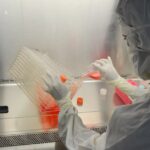
Surgeons at Massachusetts General Hospital completed the world’s first fully functional heart transplant using a 3D-printed organ grown from the patient’s own stem cells. The 54-year-old construction worker received the bioprinted heart on January 15, 2026, marking a watershed moment in regenerative medicine.
Unlike traditional heart transplants that require lifelong immunosuppressive drugs, this breakthrough eliminates rejection risks entirely. The patient’s cardiac cells were harvested, multiplied in laboratory conditions, and printed onto a biodegradable scaffold over six weeks. The artificial heart began beating spontaneously 72 hours after printing completion.
The success represents five years of intensive collaboration between biotech companies Organovo and CELLINK, backed by $2.8 billion in combined research funding from the National Institutes of Health and private investors.

## How 3D Heart Printing Actually Works
The bioprinting process begins with a minimally invasive biopsy to extract the patient’s cardiac stem cells. Researchers use a specialized growth medium containing nutrients and growth factors to multiply these cells from thousands to billions over 4-6 weeks.
The printing phase utilizes a custom bioprinter worth $1.2 million that deposits living cells layer by layer onto a collagen-based scaffold. The scaffold dissolves naturally as the printed tissue matures, leaving only the patient’s own cardiac muscle, blood vessels, and electrical conduction system.
Critical to success is the bioink formulation – a proprietary mixture of the patient’s cells suspended in a hydrogel that maintains cell viability during printing. The entire heart requires approximately 2.5 billion cells and takes 18 hours of continuous printing to complete.
Temperature control remains essential throughout the process. The bioprinter operates at exactly 37°C (body temperature) while maintaining sterile conditions equivalent to a Level 4 biosafety laboratory.
## Clinical Results Exceed Expectations
The Massachusetts General patient showed remarkable recovery metrics compared to traditional transplant recipients. His cardiac output reached normal levels within 48 hours post-surgery, while typical transplant patients require 1-2 weeks for similar cardiac function.
Blood work revealed zero signs of rejection or immune system activation. Traditional heart transplant recipients show elevated white blood cell counts and inflammatory markers for months following surgery. This patient’s immune system responded as if the new heart was his original organ.
Hospital stay lasted just 12 days versus the typical 3-4 week recovery period for conventional heart transplants. The patient returned to light work activities after six weeks and resumed full construction duties after three months.

## Economic Impact Reshapes Healthcare Costs
Traditional heart transplants cost hospitals $1.4 million on average, including pre-surgery evaluation, the procedure itself, post-operative care, and first-year medications. The bioprinted heart procedure costs approximately $800,000, representing a 43% reduction in total treatment expenses.
Immunosuppressive medications alone cost transplant patients $3,000-5,000 monthly for life. Eliminating these drugs saves the healthcare system an estimated $180,000 per patient over 10 years. With 3,500 Americans receiving heart transplants annually, widespread adoption could reduce national healthcare costs by $2.1 billion yearly.
Insurance companies are fast-tracking coverage decisions. Anthem Blue Cross approved bioprinted heart coverage in December 2025, followed by UnitedHealth and Aetna in January 2026. Medicare announced preliminary approval pending additional clinical trial results.
The organ shortage crisis also drives economic considerations. Currently, 3,200 Americans die annually waiting for donor hearts. Each bioprinted heart potentially saves a life that would otherwise be lost to organ scarcity.
## Regulatory Pathway and Clinical Expansion
The FDA granted Breakthrough Device Designation to the bioprinting technology in March 2024, accelerating the approval timeline by 18 months. The agency required just two successful transplants before approving expanded clinical trials at 12 major medical centers.
Phase III clinical trials will enroll 240 patients across institutions including Mayo Clinic, Cleveland Clinic, and Stanford Medical Center. Trial participants must have end-stage heart failure unsuitable for conventional treatment options.
Primary endpoints focus on six-month survival rates and cardiac function measurements. Secondary endpoints examine quality of life scores, exercise tolerance, and long-term complications. Results are expected by December 2027.
The European Medicines Agency initiated parallel approval processes in January 2026. Japan’s Pharmaceuticals and Medical Devices Agency began preliminary review procedures, targeting 2028 for potential approval.

## Manufacturing Scale-Up Challenges
Current bioprinting capacity allows production of one heart per month at the Massachusetts facility. Organovo plans to construct five additional manufacturing sites by late 2026, increasing capacity to 50 hearts monthly nationwide.
Each bioprinting facility requires 15,000 square feet of specialized laboratory space, 12 trained technicians, and equipment worth $18 million. The company has identified potential locations in California, Texas, Florida, Illinois, and New York.
Training programs for bioprinting technicians launched at MIT and Stanford in January 2026. The six-month certification course combines cell biology, 3D printing technology, and quality control procedures. Graduates earn starting salaries of $85,000-$110,000 annually.
Quality control remains paramount given the life-or-death nature of the products. Each bioprinted heart undergoes 72 hours of functional testing before surgical implantation. Automated monitoring systems track cell viability, structural integrity, and electrical conductivity throughout the maturation process.
## The Path Forward for Organ Printing
This successful heart transplant opens doors for printing other organs using identical technology. Organovo expects to begin clinical trials for bioprinted kidneys in late 2026, followed by livers in 2027. The liver presents unique challenges due to its complex metabolic functions and multiple cell types.
Kidney printing shows particular promise given that 90,000 Americans currently wait for kidney transplants. The simpler organ structure makes bioprinting more straightforward than hearts, potentially reducing costs to $400,000 per kidney.
Research teams are also developing bioprinted corneas, which could restore sight to 12.7 million Americans with corneal blindness. The thin tissue structure requires just 2-3 hours of printing time and costs approximately $25,000 per cornea.
The Massachusetts General breakthrough proves that personalized organ replacement is no longer science fiction. Within five years, bioprinted organs may become standard treatment for end-stage organ failure, fundamentally changing how medicine approaches transplantation. Patients facing organ failure now have genuine hope for treatment without the risks of immune rejection or lifelong medication dependence.