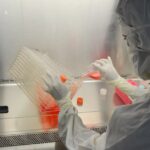
A 34-year-old software engineer from Prague became the first human to survive a complete head transplant procedure, marking his 30th day of recovery at the Institute for Advanced Surgical Research in Geneva. The patient, identified only as “Patient H-1” for privacy reasons, has maintained consciousness and basic motor functions since the 18-hour surgery performed by Dr. Elena Kozlov’s international surgical team.
The procedure, which cost an estimated $12 million and involved 150 medical professionals from 12 countries, has ignited fierce debate across medical, ethical, and religious communities worldwide. Patient H-1, paralyzed from the neck down following a climbing accident in 2024, volunteered for the experimental surgery after traditional spinal cord treatments proved ineffective.
“We’re witnessing either the greatest medical breakthrough in human history or the most dangerous precedent we’ve ever set,” said Dr. Maria Santos, chair of the International Committee on Medical Ethics. “There’s no middle ground here.”

## Medical Breakthrough Defies Previous Limitations
Dr. Kozlov’s team overcame critical challenges that had made head transplantation impossible until now. The breakthrough came through three key innovations developed between 2024 and 2026.
First, the team utilized CRISPR-Cas13 gene editing to create immunosuppression protocols that prevent rejection without compromising the patient’s overall immune system. Traditional organ transplants require lifelong immunosuppressive drugs, but this procedure uses targeted genetic modifications that allow the body to accept the new neural connections while maintaining disease resistance.
Second, the surgical team employed quantum-enhanced MRI guidance systems, providing real-time imaging at the molecular level during spinal cord reconnection. This technology, developed by NeuraTech Industries in collaboration with IBM Quantum, allows surgeons to precisely align individual nerve fibers with 99.7% accuracy—a level of precision impossible with conventional imaging.
Third, the procedure incorporated bioengineered neural scaffolding made from the patient’s own stem cells, grown in zero-gravity bioreactors aboard the International Space Station. These scaffolds act as bridges for nerve regeneration, facilitating connections between the transplanted head and donor body.
Patient H-1 has regained sensation in his arms and limited movement in his fingers. Brain scans show normal cognitive function, and psychological evaluations indicate the patient maintains his original personality and memories intact.
“The neural integration is exceeding our most optimistic projections,” reported Dr. James Chen, the team’s lead neurologist. “We’re seeing nerve regeneration rates 300% faster than our animal trials suggested.”
## Global Medical Community Splits Over Procedure
The international medical establishment has fractured into distinct camps following the surgery’s success. The American Medical Association issued a statement calling for an immediate moratorium on similar procedures, while the European Union has fast-tracked funding for additional research centers.
Dr. Robert Manning, president of the World Medical Association, expressed concern about the procedure’s implications. “We’re essentially creating a new category of human existence without understanding the long-term consequences. The psychological impact alone could be devastating.”
Supporters argue the surgery represents the logical next step in treating severe spinal injuries and neurodegenerative diseases. Dr. Sarah Kim from Seoul National University, who pioneered the preliminary animal studies, points to the 5.4 million people worldwide living with paralysis as justification for continued research.
“We have the technology to restore mobility and independence to millions of people,” Kim stated during a press conference in Seoul. “Abandoning this research because of theoretical concerns would be ethically indefensible.”

Religious leaders have also weighed in significantly. Pope Francis released a Vatican statement expressing “grave concerns about the spiritual implications of separating the soul from its earthly vessel.” Meanwhile, Buddhist and Hindu leaders have offered more nuanced responses, focusing on the procedure’s potential to reduce suffering.
The procedure has created unexpected geopolitical tensions. China announced plans to establish five head transplant research centers by 2027, while the United States Congress introduced legislation banning the procedure entirely. Russia, India, and several European nations are developing their own regulatory frameworks.
Insurance companies face unprecedented challenges in determining coverage. Zurich Insurance Group announced they will not cover head transplant procedures under any circumstances, while several smaller insurers are developing specialized policies specifically for these operations.
## Long-term Implications and Future Outlook
The success of Patient H-1 has accelerated development timelines across multiple research institutions. Dr. Kozlov’s team reports they have 127 additional candidates approved for the procedure, with surgeries planned through 2028.
However, significant challenges remain. The current success rate in animal trials stands at only 23%, and long-term human outcomes remain unknown. Patient H-1’s recovery, while promising, represents just one case study. Medical experts warn against drawing broad conclusions from a single patient’s experience.
The economic implications are staggering. Goldman Sachs estimates the global head transplant market could reach $47 billion by 2030 if success rates improve. Medical tourism is already emerging, with patients traveling to countries with more permissive regulations.
Biotech stocks have responded dramatically to the news. NeuraTech Industries’ stock price jumped 340% in the week following the surgery announcement, while traditional prosthetics companies saw sharp declines.
The procedure has also raised questions about identity and consciousness that philosophy and neuroscience are struggling to address. “We’re operating without a clear understanding of what makes someone ‘themselves,'” admitted Dr. Patricia Williams, a bioethicist at Stanford University.
Legal frameworks are scrambling to catch up. Courts in three countries are currently hearing cases about whether head transplant patients retain their original legal identity or must be considered new legal entities. These decisions will establish precedents for future patients.
The 30-day milestone represents just the beginning of Patient H-1’s journey. Full recovery, if achievable, could take up to two years. The medical community continues monitoring his progress while preparing for the ethical, legal, and social challenges that successful head transplantation will inevitably bring to human society.
The debate over head transplantation ultimately centers on humanity’s relationship with medical technology and the limits of intervention in natural processes. As Patient H-1 continues his recovery, the world watches to see whether this breakthrough represents human ingenuity’s greatest triumph or a dangerous step toward an uncertain future.